
A Fact of History
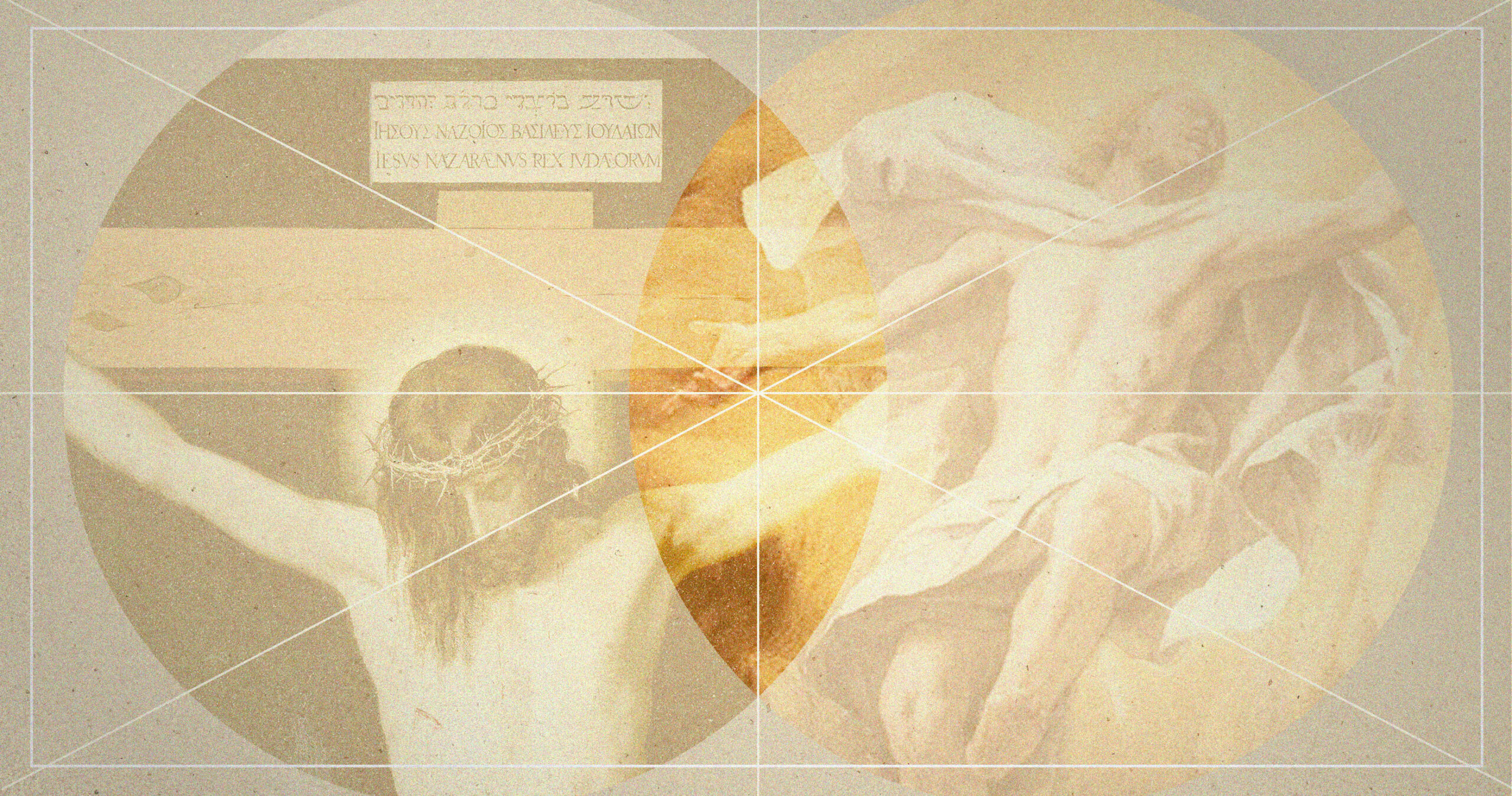
The existence of Jesus of Nazareth and his execution by the Romans is not just an article of faith for Christians. It is a fact of history. The Roman historian Tacitus wrote that “Christus, the founder of the name, was put to death by Pontius Pilate, procurator of Judea in the reign of Tiberius” (Annals 15.44). The Jewish historian Josephus similarly writes regarding Jesus that “upon the accusation of the principal men among us, Pilate had condemned him to a cross” (Antiquities 18.3.3 §63).
Only the eyes of faith, however, can see that Jesus’s death was not that of a mere man dying a horrific, excruciating death, the victim of treachery by a close follower and a phalanx of political forces—the Sanhedrin (the Jewish supreme council) and Pontius Pilate (the Roman governor)—conspiring against him. Rather, in keeping with biblical expectation and in fulfillment of prophecy, the authors of Scripture affirm that Jesus died as the regal son of David and the suffering servant of the Lord who gave his life so that believers can live with him. As Isaiah wrote,
Surely he has borne our griefs and carried our sorrows; yet we esteemed him stricken, smitten by God, and afflicted. But he was pierced for our transgressions; he was crushed for our iniquities; upon him was the chastisement that brought us peace, and with his wounds we are healed. All we like sheep have gone astray; we have turned—every one—to his own way; and the Lord has laid on him the iniquity of us all. (Isa. 53:4–6)
Jesus died for us, sinners who cannot save themselves but desperately need a Savior. He took the punishment for our sins upon himself and “was pierced for our transgressions.” By “his wounds we are healed.” And all of this was the Lord’s doing: it was he who “has laid on him the iniquity of us all.” Jesus’s death and resurrection were the ultimate game-changer. Before it, we were under God’s wrath and stood condemned (John 5:24). After it, and by virtue of it, we are saved and forgiven, adopted into God’s family and destined for eternal bliss in heaven (Gal. 4:4–5; Eph. 1:5). The death and resurrection of Christ truly changed everything.

Combining a chronological arrangement of the biblical text with insightful commentary, this book serves as a day-by-day guide to Jesus’s final week on earth, complete with a quick-reference glossary and color maps.
United with Christ in His Death and Resurrection
But there is more. Between our past gift of salvation and our future destiny of heaven lies a life lived on this earth as Christ-followers pursuing his mission and being conformed to Christ’s image in sanctification. As Paul teaches, believers are united with Christ in his death and resurrection, which makes our sanctification possible. Our union with Christ is a central plank in New Testament teaching. We are “in Christ” (Eph. 1:1, 4, 11, 13). Just as Jesus was set apart (“sanctified”) for his redemptive mission, we are set apart (“sanctified”) for mission. Jesus’s mission is primary; ours is derivative. As we proclaim the saving message of Christ, we act as his representatives, appealing to unbelievers to repent of their sin and to be reconciled to God (2 Cor. 5:20).
The New Testament teaching connecting Christ’s death and resurrection and union with Christ with our sanctification is well captured by the apostle Paul:
For if we have been united with him in a death like his, we shall certainly be united with him in a resurrection like his.
We know that our old self was crucified with him in order that the body of sin might be brought to nothing, so that we would no longer be enslaved to sin. . . .
Now if we have died with Christ, we believe that we will also live with him.
We know that Christ, being raised from the dead, will never die again; death no longer has dominion over him.
For the death he died he died to sin, once for all, but the life he lives he lives to God. So you also must consider yourselves dead to sin and alive to God in Christ Jesus. (Rom. 6:5–11; emphases added)
Here we see the beautiful truth of our union with Christ in his death and resurrection and the implications of this union for our ongoing sanctification. “If we have died with Christ, we will also live with him.” Our union with Christ in his death leads inexorably to our union with him in his resurrection, for, like his death, his resurrection is also a historical fact. Paul notes elsewhere that there are well over five hundred witnesses who saw the risen Jesus (1 Cor. 15:3–6). The death Jesus died, he died with reference to sin, and he did so once for all. He “became sin for us so that we might become the righteousness of God in him” (2 Cor. 5:21). “But the life he lives, he lives to God.” In the same way, we are to consider ourselves “dead to sin and alive to God” in him.
According to the apostle, the implication of this wonderful salvation and sanctification truth is clear:
Let not sin therefore reign in your mortal body, to make you obey its passions.
Do not present your members to sin as instruments for unrighteousness, but present yourselves to God as those who have been brought from death to life, and your members to God as instruments for righteousness.
For sin will have no dominion over you, since you are not under law but under grace. (Rom. 6:12–14)
As we claim Christ’s victory over sin, death, and the devil on the cross, we refuse to present the members of our body as instruments of sin. Instead, we present them as instruments of righteousness, knowing that sin no longer has dominion over us as it did prior to our conversion. Now we live under the aegis and energizing power of grace, having received redemption, forgiveness, and adoption into God’s family, and having been set apart so we can become what we already are: holy and set apart to be God’s instruments for his glory.
Our union with Christ in his death leads inexorably to our union with him in his resurrection.
Implications for Sanctification
The personal dimension of our union with Christ, therefore, results in our sanctification, which is both positional (we are set apart for God at conversion) and progressive (we are increasingly made holy through the work of the Holy Spirit).1 In addition to the individual dimension of sanctification, however, there is also a communal, missional, and familial dimension.2
Communal
First, sanctification is communal, lived out in the context of the church. We are made more like Christ in our relationships with others in the body of Christ. Time and again, Paul stresses that we are to live out our faith in relation to “one another.” Take his words to the Colossians as an example:
Put on then, as God’s chosen ones, holy and beloved, compassionate hearts, kindness, humility, meekness, and patience, bearing with one another and, if one has a complaint against another, forgiving each other; as the Lord has forgiven you, so you also must forgive.
And above all these put on love, which binds everything together in perfect harmony.
And let the peace of Christ rule in your hearts, to which indeed you were called in one body.
And be thankful.
Let the word of Christ dwell in you richly, teaching and admonishing one another in all wisdom . . . . (Col. 3:12–16)
Missional
Second, sanctification is missional. It is not an end in itself, as if the end goal of our sanctification were our individual holiness. Rather, our growth in holiness is to reflect God’s glory, and the same God, in Christ, has commissioned his people to “go and disciple the nations” (Matt. 28:18). Thus God has set us apart for a purpose. He has cleansed us and equipped us to represent him in sharing the good news of salvation in Christ with a lost and dying world.
Familial
Finally, third, sanctification is familial. We live out our sanctification first and foremost in our marriages and families. Thus Paul urges husbands to play a vital part in their wives’ sanctification (Eph. 5:25–29). Also, mature Christian women are to mentor young women to love their husband and children and to manage their household well (Titus 2:3–5).
What started our journey of faith in surrendering our lives to Christ has morphed into a sanctified day to day quest to let the Spirit continue and complete his work in us as we are part of our church community, join God in his mission in this world, and live out our faith in our families.
Conclusion
The death and resurrection of Jesus are the indispensable foundation for our sanctification. Because Jesus died for us and rose again, we too died to our sinful selves and have a new life in him. Our union with Christ in his death and resurrection launches us into orbit as we pursue our sanctification in the Spirit. Not only do we do so individually, but we also live out our faith in our communities, as part of the church’s mission, and in our families. Christ’s death and resurrection make our sanctification possible, and for this we can be eternally grateful.
Notes:
- See Marny Köstenberger, Sanctification as Set Apart and Growing in Christ, SSBT (Wheaton: Crossway, 2023).
- See Marny Köstenberger, “Sanctification: Its Communal, Missional, and Familial Dimensions,” Tabletalk, February 2026, https://tabletalkmagazine.com/posts/sanctification-its-communal-missional-and-familial-dimensions/.
Andreas J. Köstenberger is coauthor with Justin Taylor of The Final Days of Jesus: The Most Important Week of the Most Important Person Who Ever Lived.

Related Articles
What Jesus’s First Miracle Shows Us About Who He Is
The miracles of Jesus have always been a central confession of our faith, creating an obvious tension between the ancient church and the technological society. How is the church to respond?
Setting the Stage for the Four Gospels
The four Gospels contain eyewitness accounts (and first-hand reports) of the life, death, and resurrection of Jesus.
Why Jesus Needed to Be Baptized
The Baptism of Jesus is an important event in his life that helps us understand his person and his work.
Jesus’s Temptation Changes How We See Our Own
As believers in Jesus Christ, we constantly face temptation. We have been transformed by God’s grace, but we are not yet free from temptation.
