
How Do We Resist Temptation?
As believers in Jesus Christ, we constantly face temptation. We have been transformed by God’s grace, but we are not yet free from temptation. One of the reasons we look forward to heaven is that temptation will be over.
While we live on earth, though, the devil will continue to tempt us to sin. In 1 Thessalonians 3:5, Paul calls Satan “the tempter,” and that is a good description of what he wants to do.
Perhaps one of our friends doesn’t pay attention to us as much as they did previously. We feel left out or snubbed. We are tempted in such a situation to feel bitter and resentful and to indulge in self-pity.
Or perhaps our finances are very tight, so we are tempted to respond in worry and anxiety, wondering where we will get the money we need to make it.
Perhaps circumstances in our lives have taken a turn for the worse. We wonder if what we do is really significant and whether it really matters. Satan in such situations tempts us to be discouraged. He whispers in our ears, Your life is meaningless and you might as well live to please yourself.
How do we resist the many temptations that we encounter in our lives? We know from Hebrews 4:15 that Jesus wasn’t exempt from temptation. We read there that “we do not have a high priest who is unable to sympathize with our weaknesses, but we have one who has been tempted in every way, just as we are—yet was without sin.”

Three New Testament scholars offer passage-by-passage commentary through the narratives of Matthew, Mark, and Luke, explaining difficult doctrines, shedding light on overlooked sections, and making applications to life and ministry today. Part of the ESV Expository Commentary.
Jesus’s Temptation
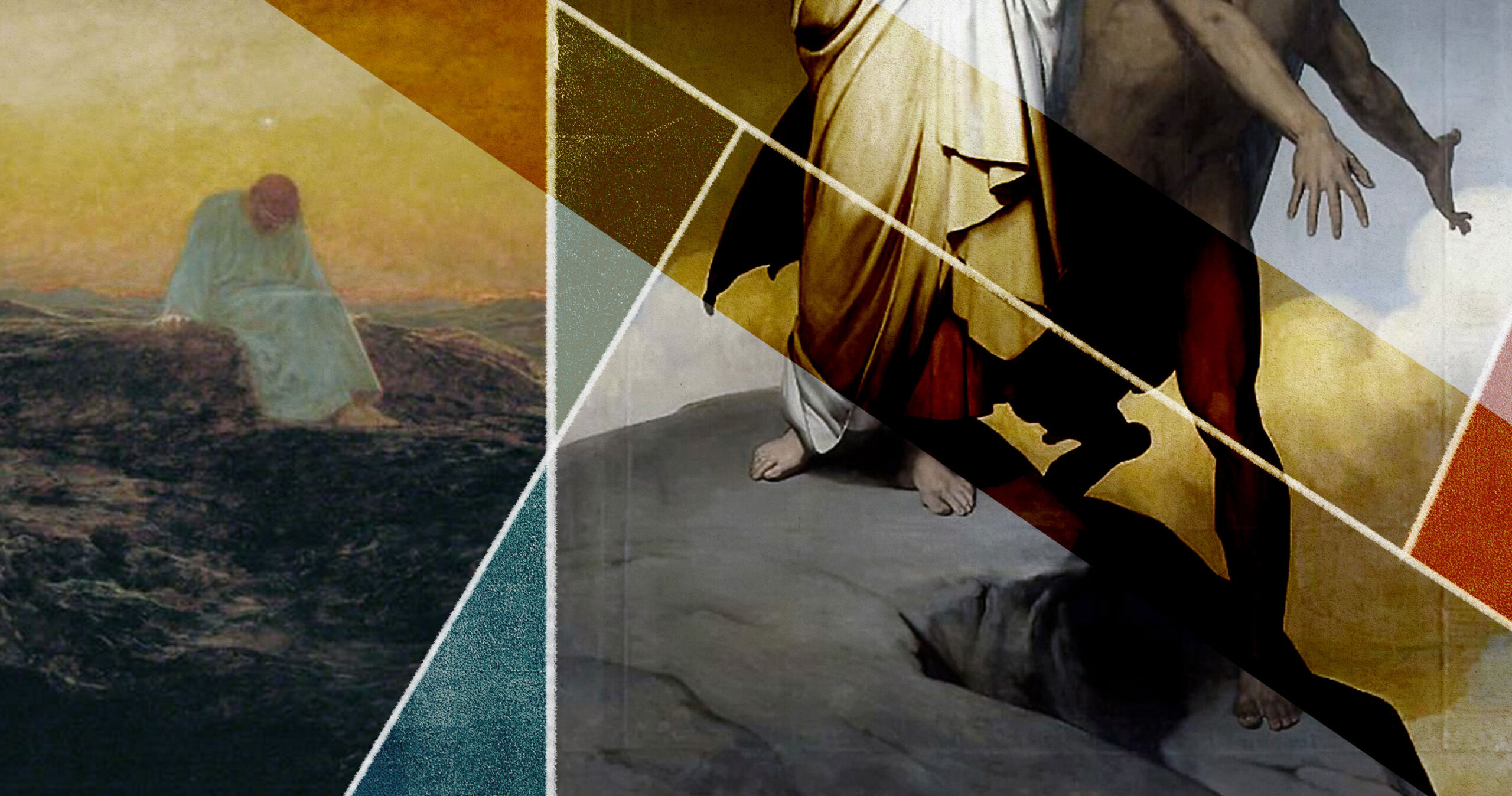
And in Luke 4:1–15, we read about how Jesus resisted the temptations of Satan. Many things are happening in these verses, but I want to shine the light on how Jesus functions as an example to us.
The first thing that we should notice is that Jesus relied on the Holy Spirit. Notice in verse 1 that “Jesus, full of the Holy Spirit, returned from the Jordan and was led by the Spirit in the desert” (Luke 4:1). Only Luke tells us that Jesus was full of the Spirit when he returned from the Jordan.
Verse 14 also emphasizes the Holy Spirit: “Jesus returned to Galilee in the power of the Spirit” (Luke 4:14). Luke is telling us that Jesus resisted the temptations he experienced as a human being, in the same way we do, by relying on the power and strength of the Holy Spirit.
Indeed, Luke wants us to contrast Jesus in the wilderness with Israel in the wilderness. Israel wandered in the desert forty years and consistently disobeyed God’s will. Jesus fasted in the wilderness for forty days and did what God commanded.
Temptation to Physical Satisfaction
Now let’s look at the temptations one by one. We know from Luke 4:2 that Jesus fasted for forty days and was very hungry. In verses Luke 4:3–4 the devil comes to him and says, “‘If you are the Son of God, tell this stone to become bread.’ Jesus answered, ‘It is written: Man does not live on bread alone.’”
Remember that the Lord tested Israel in the wilderness by causing them to hunger and then by satisfying their needs with manna.
When Satan tempted Jesus, I think he had this passage in Deuteronomy in mind. Satan turns the passage on its head. Satan’s words to Jesus are clear. Since you are God’s Son and you have the authority to turn a stone into bread, do so. Satisfy your physical needs.
Satan invites Jesus to fulfill the role that the Lord plays in Deuteronomy. Just as the Lord supplied manna for Israel, so Jesus is to show that he is the Son of God by supplying manna for himself.
Jesus refuses Satan’s temptation, for his calling on earth is to live in dependence upon God, relying on the Spirit to strengthen him. Jesus will not satisfy his own hunger in his own strength. He will rely upon God to feed him. He will wait for God to fulfill what he has ordained.
So what is the lesson for us? How are we responding to our physical needs? Are you financially strapped? Do you feel sexually unfulfilled? It is tempting to try to fulfill our needs by relying on our own wisdom and our own resources.
God calls upon us to trust in him. What would it mean for you to trust God in such situations? When Eve saw that the tree was good for food in the garden, she ate it. She didn’t trust that God would meet her needs.
Temptation to Pride
We see the second temptation in Luke 4:5–7: “The devil led him up to a high place and showed him in an instant all the kingdoms of the world. And he said to him, ‘I will give you all their authority and splendor, for it has been given to me, and I can give it to anyone I want to. So if you worship me, it will all be yours.’”
I take it that we have a genuine offer from Satan here. God has given Satan authority over the kingdoms of the world. Jesus doesn’t dispute Satan’s ability to give him authority over the kingdoms of the world.
We must be careful here, for God is sovereign over all the kingdoms of the world. As Daniel 2:20–21 says, “Praise be to the name of God for ever and ever; wisdom and power are his. He changes times and seasons; he sets up kings and deposes them.” Notice that kings are established and removed by God.
Romans 13:1 also makes it clear that no one rules apart from God’s will: “Everyone must submit himself to the governing authorities, for there is no authority except that which God has established. The authorities that exist have been established by God.”
So, how can we put together Satan’s rule over kingdoms with God’s sovereignty over who rules? I take it that whatever Satan decides must be permitted by God for it to take place. Satan doesn’t have any authority apart from God’s will and his permission. So, ultimately, God is sovereign over all that happens.
Returning to the temptation itself, we see that Jesus is tempted to fall prey to pride. Make yourself great, Satan says. Rule over the world for your own praise and glory.
A similar temptation strikes us today. The world tells us, Do whatever you can to advance yourself. Be assertive. Don’t let anyone get in your way.
Maybe you are thinking, I am not tempted with pride. But if you think that way, you fail to see yourself rightly. Pride, as C. S. Lewis wrote in Mere Christianity, is the “great sin.” It is the sin Eve committed in the garden because she ate of the fruit to become wise and to become like God. Pride is independence from God. Pride is self-sufficiency. Pride is a rejection of God’s lordship.
Notice how Jesus answered the devil. Jesus counters the devil again with Scripture. This shows us that one of the great ways to respond to temptation is with the word of God. In all three instances, Jesus counters the devil’s temptation with Scripture. But if you don’t know the Bible, then you will be unable to respond to the fiery darts of Satan with God’s word.
How important it is to memorize Scripture so that we can respond to Satan when he attacks us.
Jesus answers the second temptation with a quotation from Deuteronomy 6:13: “It is written: ‘Worship the Lord your God and serve him only.’”
The Lord God whom we are to worship and serve here is not Jesus himself, but the Father. In other words, Jesus responds to the temptation to pride by reminding the devil that his purpose in life is to worship, adore, and serve the one true God.
That is the answer for pride in our lives as well. The greatest antidote to pride is worship. When we are proud, we exalt ourselves as great. But when we worship, we exalt God as great. When we are proud, we say, “Look at me.” But when we worship, we say, “Look at God.” When we are proud, we want people to serve us. When we worship, we want people to serve God.
God is calling each one of us to trust him in what we do in everyday life, in what he has called us to do that day.
Temptation to Test God
Satan tempts Jesus one more time. He tempts him to put the Lord to the test. We see what the devil did beginning in Luke 4:9:
“The devil led him to Jerusalem and had him stand on the highest point of the temple. ‘If you are the Son of God,’ he said, ‘throw yourself down from here. For it is written: “He will command his angels concerning you to guard you carefully; they will lift you up in their hands, so that you will not strike your foot against a stone.’”
The devil is crafty and tricky in this temptation because he quotes Scripture to try to ensnare Jesus. He quotes from Psalm 91. It seems that the devil wants Jesus to do something risky and spectacular to show how much he trusts in God.
The devil reminds Jesus of God’s promise: Nothing will ever happen to you because God has put angels in charge of you. Your foot will never hit the ground if you leap off the temple. That’s what the Bible says!
We learn from this that Satan is a crafty and subtle opponent. We will never defeat him through our own wisdom. Satan is brilliantly evil. He can quote the Bible to advance his own agenda. We can only defeat him if we truly know God and truly know the Scriptures.
The temptation here is to do something great for God, to show him how much we rely upon him. Of course, God may call upon you to do something risky for his kingdom. The Lord doesn’t command us to always do what is safe.
In this case, however, the temptation is to think that we must do something radical and risky if we are truly following God. We might be tempted to think, Well, I am hardly doing God’s will if I am simply working in business. Or we might think, I can’t please God simply by being a homemaker. I am going to show God how much I trust him by doing something really surprising and unusual.
Jesus counters this temptation by quoting Deuteronomy 6:16: “Do not put the Lord your God to the test.”
Jesus is saying to Satan, If I jump off the temple, then I am testing the Lord. I am trying to force his hand. I am trying to show him and others how remarkably devoted to him I am. And Psalm 91 (which the devil quoted) isn’t about me doing radical things to show God how much I love him. Psalm 91 is about God watching over me in the ordinary events of everyday life.
God is calling each one of us to trust him in what we do in everyday life, in what he has called us to do that day.
We see, then, that Jesus resisted temptation by the Spirit and the word. He relied on the Holy Spirit for strength and countered Satan with the word of God. May God give us grace to do the same.
Thomas Schreiner is a contributor to the ESV Expository Commentary: Matthew–Luke (Volume 8).

Related Articles
What Jesus’s First Miracle Shows Us About Who He Is
The miracles of Jesus have always been a central confession of our faith, creating an obvious tension between the ancient church and the technological society. How is the church to respond?
Did Jesus Teach That Our Prayers Are Bothersome to God? (Luke 18)
In Luke 18 Jesus tells of a judge who does not fear God or respect human beings.—especially those who, like the widow, are poor and disadvantaged.
What Is Distinct about the Theology of Luke?
The four Gospels present Jesus as true Israel and the divine Son of God who lived a faithful life, died for sins of his people, and rose from the dead, but each evangelist retells this story a bit differently.
Why Jesus Needed to Be Baptized
The Baptism of Jesus is an important event in his life that helps us understand his person and his work.
